Lexikon

Spülstein

Spülstein ist der übliche Begriff für einen porösen Bodenstein, durch den ein Begasen einer Schmelze in Öfen oder einer Pfanne möglich ist. Es wird in der Regel mit Argon gespült. Das Gas wird mit geringem Druck in die Schmelze eingeleitet und durch die Partialdrucksenkung anderer Gase aus der Schmelze entfernt. Außerdem kann das Einblasen von Spülgas (auch Stickstoff) zum Verrühren oder Vermischen der Schmelze mit zugesetzten Reaktionsstoffen, z. B. Aufkohlungs- und Entschwefelungsmittel, dienen.

Beim Schmelzen von Chrom-Nickellegierungen im Induktionstiegelofen kann mit Hilfe der Argonspülung eine wesentliche Verkürzung der Schmelz– und Legierungszeit erreicht werden.
Mit Hilfe einer Stickstoffspüllanze kann bei Leichtmetallen und bei Zink eine höhere Schmelzleistung durch die intensive Badbewegung erreicht werden.
Visualisierung

Visualisierung ist die bildliche Darstellung von Schaltzuständen und Prozessabläufen auf Bildschirmen.

Kühlwasser

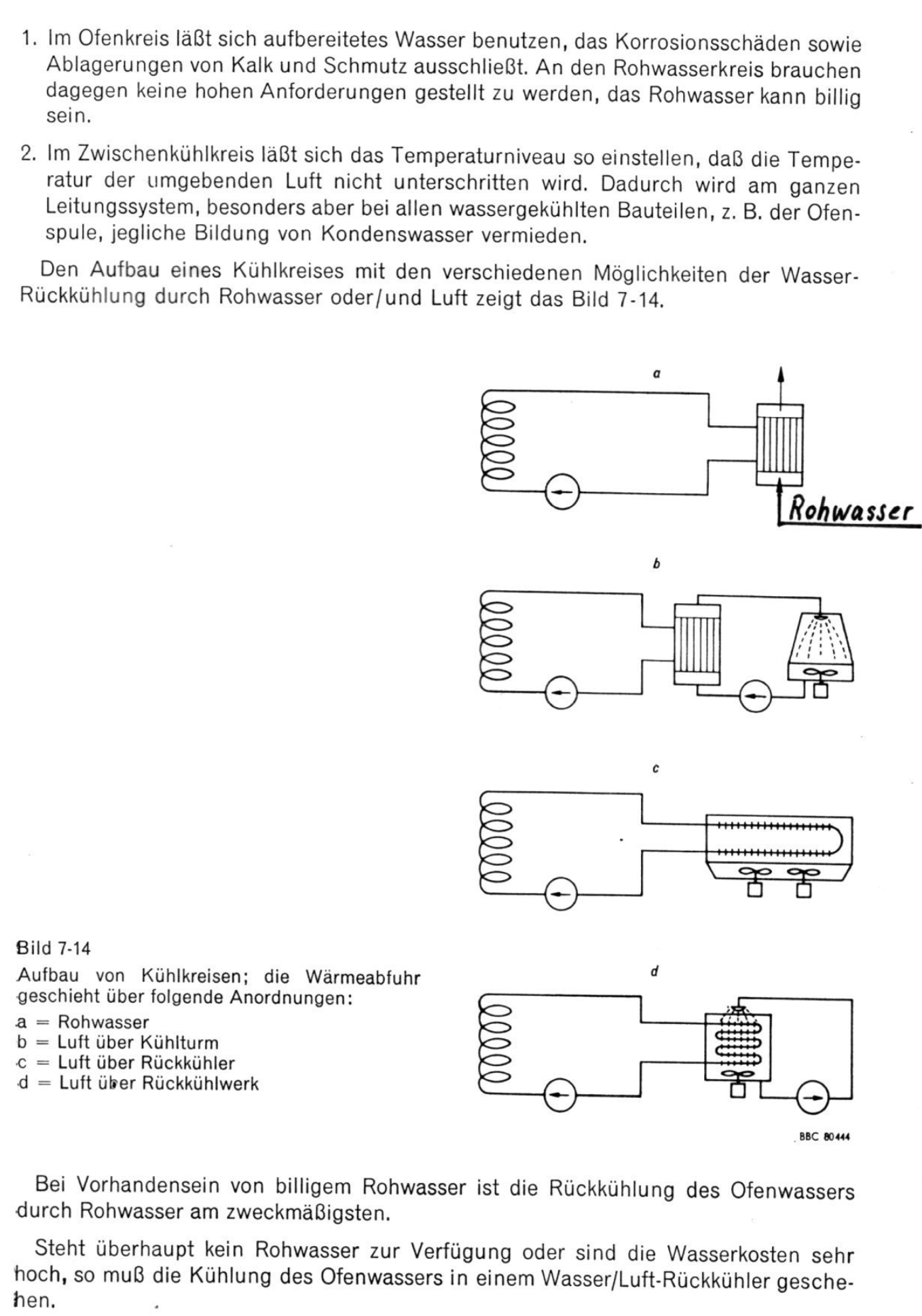
Kühlwasser wird zum Abführen der Wärmeverluste der Ofenspule, hervorgerufen durch den hohen Strom und dem Widerstand der Ofenspule, der Verluste in den Eisenpaketen, dem Kurzschlussring sowie den thermischen Verlusten aus der Tiegelwand benötigt. In der Regel handelt es sich um Stadtwasser. Nur bei sehr stark kalkhaltigem Wasser wird auf Kesselwasser oder aufbereitetes Wasser zurückgegriffen. Das Wasser wird im geschlossenen Kreis gefahren, und es muss nur das „Verlustwasser“ nachgespeist werden.

Temperaturwechsel

Temperaturwechsel oder Temperaturwechselbeständigkeit beziehen sich bei Induktionsöfen in der Regel auf die Eigenschaften der Keramik bei unterschiedlichen Temperaturen. Eine saure Zustellung ist weniger temperaturempfindlich und damit temperaturwechselbeständiger als basische und neutrale Massen.

Pore

Eine Pore ist die Bezeichnung für einen offenen oder geschlossenen Hohlraum im Gefüge.

Insulation monitoring

by means of a melting bath earthed by bottom electrodes offers great safety for operating personnel, and can sometimes also give an indication of the condition of the crucible. In this system, the insulation value between the voltage-carrying furnace coil and the earth potential is determined by means of direct current measurement. In the case of proper electrical insulation between the coil and the iron piles, and the high-current system, the power supply and the earth potential, a low insulation value can be attributed to the resistance between the coil and the earthed melting bath, and thus also the condition of the crucible (page 98).

In the case of a newly concreted coil installation with coil plastering, the poor resist- ance value is usually due to the high moisture content. At resistance values below 400 Ohms, a crucible induction furnace should therefore not be operated at above 1,000 Volt operating voltage. From 400 – 700 Ohms, a level of 1,500 Volt should not be exceeded, since in addition to the measured “earth short” due to moisture between the coil and earth, the winding voltage can also lead to winding shorts. At approx. 60 Volt winding voltage and mains frequency, there is a winding insulation of 3 mm. In the moist condition, the winding voltage should be no more than 10 V/mm, or in other words 30 Volt. In the case of medium-frequency furnaces, one has winding voltages of up to 270 Volt and 15 mm of intermediate layer insulation, so that consequently a winding voltage of 150 V should not be exceeded.

Cold start

is the starting of a crucible following a shut-down. In an NF furnace, starter blocks are required reaching up to 2/3 of the coil height. These blocks are heat- ed inductively and then settle together. At this point, small quantities of scrap can be recharged. After reaching the 2/3 filling level, larger quantities of scrap can be added (5% of the total capacity) and melted. The furnace is brought up to the maximum filling level at approx. 70% of nominal performance. The melt should now be brought up to about 100 K below the normal tapping tempera- ture, and maintained at this temperature for 1 hour. The furnace is then brought up to tapping temperature and the 1st tapping carried out.

Charge material

is the general term for the material to be melted. An induction furnace is basical- ly suitable for the melting of all electrically conductive materials. The limits are defined by the behaviour and properties of the molten material within the cru- cible material.

Charge

is the material placed in the furnace in order to be melted.

Tiegelreinigungsgeräte

Tiegelreinigungsgeräte werden zum Abkrätzen und Reinigen von keramischen Tiegeln in
Aluminiumtiegelschmelzöfen eingesetzt. Es handelt sich um ein Gerät
mit 3 oder 4 Spaten, die ggf. einzeln pneumatisch wie ein Presslufthammer betätigt werden. Nach dem 1. Abwärtshub werden die Spaten nach oben gefahren, um die vorgegebene Teilung gedreht und noch 2-5 mal zum Reinigen nach unten gefahren. Zum Entfernen werden ca. 300 mm Aluminium im Tiegel belassen um dann mit einem modifizierte“ Schlackenbagger „die Reste aus dem Ofen zu holen Diese Arbeiten müssen im noch betriebswarmen Zustand ausgeführt werden, da bei einem zu kalten Tiegel nicht nur die Krätze entfernt wird sondern auch die Tiegelwand erheblich beschädigt werden kann. Mechanische Abfräsgeräte haben sich nicht bewährt.